
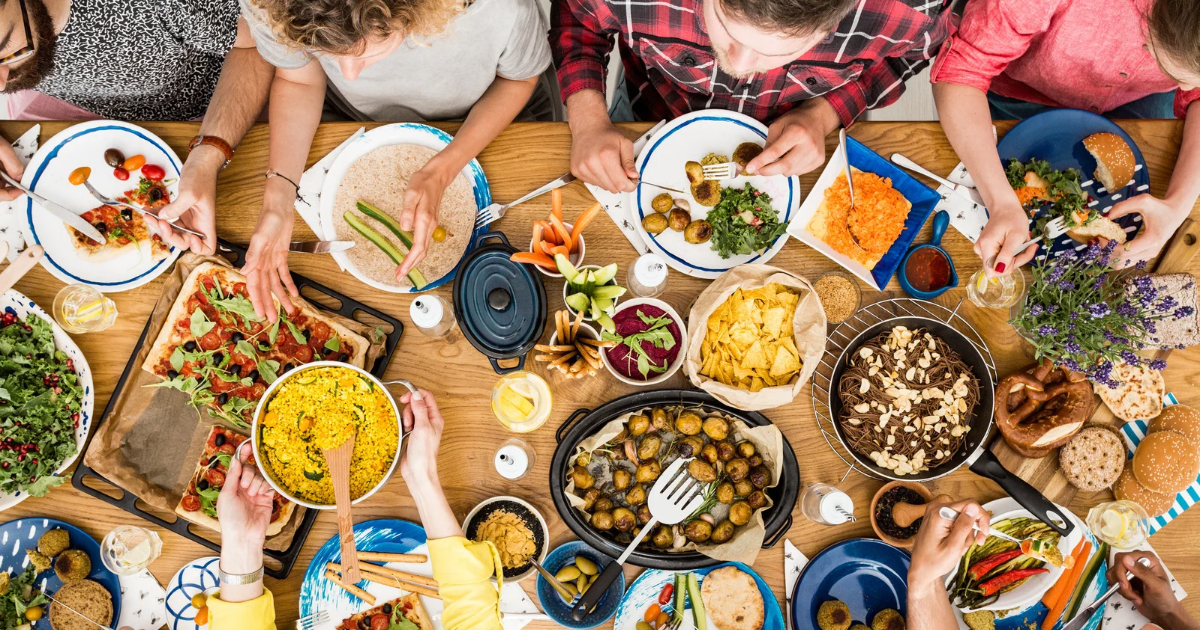
Growing up Puerto Rican, food was simply food. Eating rice and beans was just another day. It was both my lunch and my dinner. It was part of the celebrations and gatherings we would have as a family or with friends. In a lot of ways, it was also part of how we connected with each other and a part of home. Unfortunately, as time passed, I started hearing how the foods I grew up eating were the foods I needed to be “careful of.” And I went from not thinking about my food twice to thinking that I should not eat rice because it had “too many carbs,” or beans suddenly needed to be portioned out, plantains became something to limit, and pernil something that was “too fatty” to enjoy freely. And suddenly a salad or a “protein bowl” became the symbol of what a “healthy meal” was supposed to be. I remember feeling unsettled by this because, how does a food that communicates home, culture, and belonging suddenly become something to fear or something that you feel you need to correct?
This is when I began to recognize how deeply ingrained diet culture is in our society. Diet culture is more than individual diets or calorie counting — it is also a broader belief system that assigns moral value to food and bodies.
Diet culture is influenced by the same systems and ideas that have historically told us which bodies, traditions, and ways of living are considered acceptable. We can see this in the way we talk about cultural foods.
For example, diet culture does not necessarily tell us, “don’t eat your cultural foods.” But it does tell us, “eat them this way instead.”
And do not get me wrong, there is nothing inherently wrong with modifying a recipe for a meal. We can adapt recipes because of taste, access, ingredients we have available, allergies, or simply because we like something better a certain way. The problem is when the modification becomes a requirement for the food to be considered “acceptable.” When the message is that “this food is okay now because I have made it healthier,” we are not just changing the recipe, we are changing the meaning we attach to the food. Think about a seemingly ordinary “healthy bowl”: Rice, beans, meat, vegetables, salsa, maybe some avocado. We see these ingredients advertised at restaurants as a balanced meal but put many of those same foods on your grandmother’s dinner table, and suddenly the conversation can sound very different. Now we start talking about “too many carbohydrates,” “too much oil” or “too much meat.” The food has not fundamentally changed, so why has our perception of it?
We see this happen when we talk about entire cuisines and cultural foods too. Some foods and cuisines have become closely associated with wellness and healthy eating, while others are more often talked about in terms of what they supposedly contain “too much” of.
And that’s where the idea of diet culture colonizing cultural foods becomes important. When I use the word “colonizing,” I am thinking about what happens when an outside standard gets placed onto our cultural foods and starts determining which versions are acceptable. It can turn into something like: My culture’s food is bad. Western wellness food is good, therefore my family’s way of eating is something I need to fix.
Over time, those messages can become about more than just the food because, when we repeatedly hear that the foods associated with our families and cultures are unhealthy, we can start to internalize those judgments. And in the context of cultural foods, this can become particularly complicated because rejecting the food can sometimes feel like rejecting a part of yourself.
For someone navigating eating disorder recovery, this can be an opportunity to reconnect with the foods that hold meaning to us. Recovery asks us to question the rules we have learned about food and to make room for flexibility. That can definitely include the foods we grew up with. Maybe part of that process is getting curious about where some of our beliefs about cultural foods came from. For example, did I actually decide that this food was “too much” or did I just learn to see it that way? There can be a lot of freedom in realizing that we do not have to change our cultural foods before we can enjoy them. We can let them be what they are and we can eat the food our family makes without immediately thinking about how we could make it healthier.
For me, that is part of reclaiming my relationship with food. It is being able to sit down at a table with food that feels familiar and not have to think so much about whether I should be eating it.
Healing from diet culture means allowing food to be more than its carbohydrate, fat, protein, or calorie content because food can hold a lot of meaning at once. It can remind us of our families, where we come from, and what feels like home.
My Puerto Rican food does not need to be “healthy enough” to deserve a place at my table. Rice does not need to be replaced. Beans do not need to be justified because they are a “good source of fiber.” Plantains do not need to be baked instead of fried to become worthy of eating. And pernil does not need to be made leaner to become acceptable. Food can be culturally meaningful without needing a nutritional justification and maybe reclaiming our relationship with food means allowing food to simply be food again.