
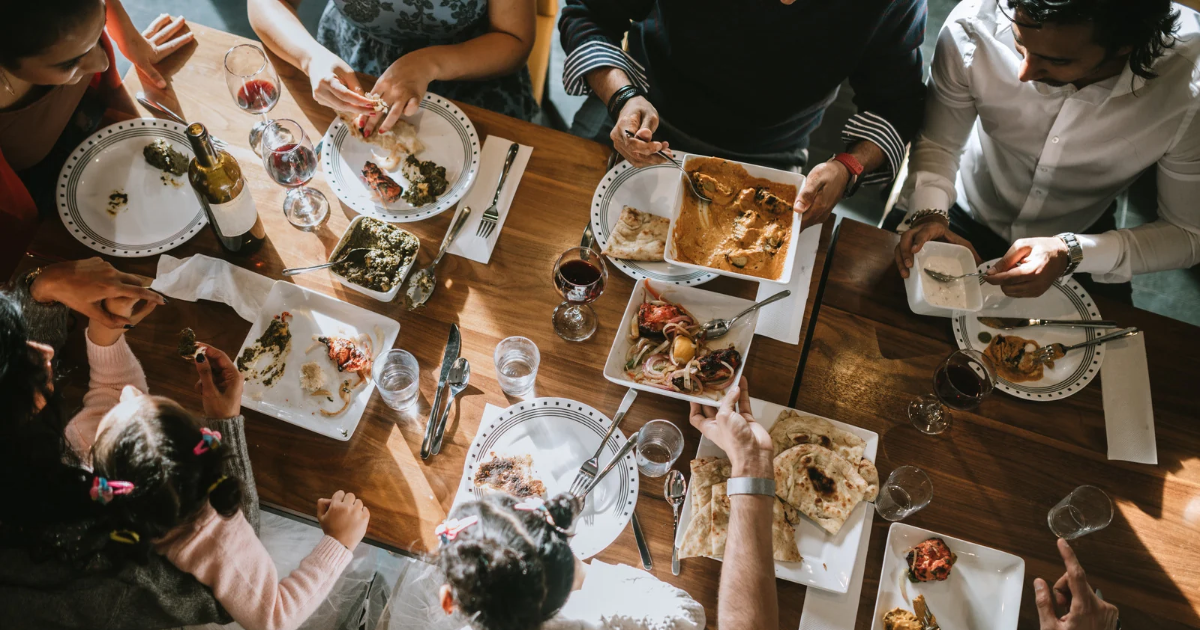
In many South Asian families, food means love.
It is how we welcome people in our homes and how we celebrate. It is what our families encourage us to eat when we are sick, what our relatives bring when they visit, and what somehow always seems to appear on the table even when everyone insists they are already full.
Some of my favorite memories are connected to food. But growing up surrounded by these traditions has also made me aware of how much meaning we can attach to food, health, and appearance.
Comments about appearance can be casual. Conversations about bodies can happen at family gatherings. Certain foods can be labeled as “good” or “bad.” Sometimes, these comments come from a place of love or concern. Other times, they are so normalized that nobody thinks twice about them.
And that is part of what makes eating disorders so difficult to recognize in some South Asian communities.
There is a stereotype of what someone with an eating disorder looks like. There is also a stereotype of what someone with an eating disorder is supposed to be like: Someone who openly talks about mental health, someone whose family immediately recognizes that something is wrong, someone who fits neatly into the stories we have already heard.
But eating disorders do not follow those rules. They do not belong to one race, culture, religion, or type of family. And they certainly do not have one appearance.
For people growing up in cultures where food and family are deeply connected, it can be difficult to separate cultural expectations from personal struggles. When certain conversations about food or bodies have been part of family life for as long as we can remember, it can be hard to recognize when those messages are affecting us in harmful ways.
There is also the stigma surrounding mental health itself.
In some families, talking about mental health can feel uncomfortable or unfamiliar. There may be fear of judgement from relatives, pressure to keep personal struggles private, or simply a lack of understanding about eating disorders.
Sometimes, the hardest part is not recognizing that someone needs support. It is creating an environment where they feel safe enough to ask for it.
This is why conversations about eating disorders in South Asian communities matter so much to me.
Breaking the stigma does not mean blaming our cultures or our families. Culture is a meaningful part of who we are, and many of the traditions surrounding food are rooted in love, connection, and community. But loving our culture does not mean that we cannot question some of the messages that have been passed down through generations.
We can hold both truths at once.
We can love the food we grew up with while challenging the idea that food determines our worth. We can value our families while recognizing that comments about appearance can have a negative impact. We can respect traditions while making room for conversations about mental health that previous generations may not have had.
Most importantly, we can make recovery culturally relevant.
Someone seeking support should not have to feel like their cultural background makes their experience harder to explain or less valid. They should be able to find providers, advocates, and recovery stories that understand the role culture can play in their relationship with food, family, and mental health.
Representation matters.
Sometimes, seeing someone with a similar background talk openly about an eating disorder is enough to make another person think, Maybe I am not the only one.
That realization can be incredibly powerful.
Change can also begin at home. We can be more thoughtful about the way we talk about bodies. We can stop treating comments about someone's appearance as harmless conversation. We can listen when someone says they are struggling, rather than immediately dismissing their feelings. And we can make mental health a topic that is talked about before someone reaches a breaking point.
I want to see a future where a child growing up in a South Asian family can enjoy the food they grew up with without feeling that it determines their worth; where conversations about mental health are met with understanding rather than shame; where seeking professional help is seen as taking care of yourself, not as a failure.
There is still so much work to do. We need more culturally responsive research, better representation in eating disorder advocacy and treatment, and more resources that recognize how different people's experiences can be.
But I am hopeful because conversations are changing.
We do not have to leave our cultures behind to create healthier relationships with food, our bodies, or ourselves. We can carry forward the parts of our cultures that bring us connection and joy while challenging the messages that cause harm.
And if you have ever looked at the typical picture of an eating disorder and thought, that doesn't sound like me, I hope you know that you do not have to fit a stereotype to deserve help.
Your story does not have to look like anyone else's.
You deserve to be seen, supported, and allowed to recover.