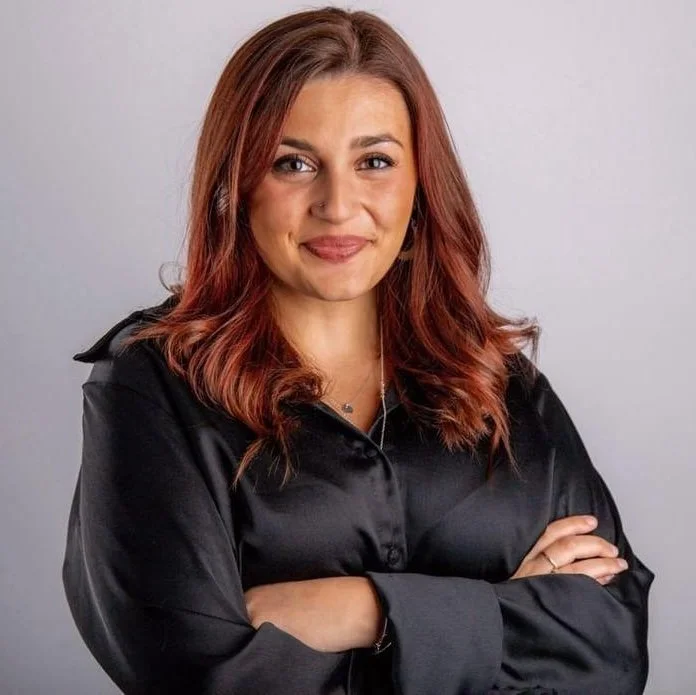

I Needed a Stranger. So I Became One.

I had no idea how much life was waiting for me.
When I was struggling with an eating disorder, I couldn't see the friendships I hadn't made yet, the places I hadn't traveled, the person I would become, or the thousands of strangers who would one day become part of my story. I couldn't see any of it. I could only see the life directly in front of me, and for a long time, that life felt incredibly small.
For years, my eating disorder convinced me that my body was the most important thing about me. It made my world smaller while convincing me that becoming smaller would somehow make my life bigger. It made mirrors feel more powerful than memories and convinced me that my worth could somehow be measured by what I saw reflected back at me. And maybe the hardest part was how lonely it was. Eating disorders thrive in isolation. They tell us that no one will understand, that we are too much, that we are not sick enough, that we should be doing better, that we should keep it to ourselves. For a long time, I listened.
Recovery did not happen in one life changing moment. There was no movie scene where everything suddenly made sense. Recovery was a collection of choices. Some brave, some reluctant, some so small no one else would have noticed them.
It was choosing to stay. Choosing to try again. Choosing to believe other people when I couldn't yet believe myself. Eventually, it was choosing to find out who I was when an eating disorder was no longer allowed to make every decision for me.
As I recovered, I started realizing how much I had almost missed. I almost missed friendships that make me laugh until I can't breathe. Trips that became stories we will tell forever. Dancing. Graduations. Terrible jokes. Beautiful sunsets. Falling in love with places I had never seen before. Becoming a social worker. Writing a book. Standing on stages and telling people the things I once desperately needed someone to tell me.
I almost missed becoming myself.
There is something I think about often now called the pinky promise theory. The idea is that if you could meet the future version of yourself, even for a moment, they could reach back through time, lock pinkies with you, and promise that there are things ahead worth staying for. Things you cannot see yet because you haven't lived them yet. People you haven't met. Places you haven't been. Versions of yourself you don't even know exist.
I wish I could pinky promise the version of me who was struggling that one day she would laugh so hard her stomach hurt. That she would dance again. Travel. Graduate. Write a book. Become a social worker. Stand on stages. Find people who love her for all the things that have absolutely nothing to do with what she looks like.
Most of all, I wish I could tell her that one day, the thing that made her feel so alone would become part of the reason other people felt a little less alone.
Years later, one sentence became the foundation of nearly everything I wanted to say to people struggling with their bodies: What you look like is the least interesting thing about you.
There are so many interesting things about you that have nothing to do with your body. The way you make your best friend laugh. The song you play over and over. The way you remember someone's coffee order. The things you care about so deeply that your voice changes when you talk about them. Your weird sense of humor. Your compassion. Your stubbornness. The places you haven't traveled yet. The people you haven't met yet. The version of you that you haven't even had the chance to become.
An eating disorder cannot predict your future. And neither can the worst day of your life.
That belief eventually became something much bigger than a sentence I shared on stages. It became Love, A Stranger.
The idea was simple: What if someone struggling with an eating disorder, body image, or self worth didn't have to wait until their next therapy appointment to tell someone they were having a hard night? What if someone could simply text and say, "I'm struggling," and another human being would answer?
Not to diagnose them. Not to fix them. Not to judge them. Just to stay with them in the moment.
Because sometimes you don't need someone to solve your entire life. Sometimes you just need someone to help you through the next ten minutes.
Love, A Stranger was created to be that place. Today, our peer-led eating disorder helpline provides real time emotional support by text and phone to people struggling with eating disorders, body image, food, recovery, and self worth, as well as the people who love them. We connect people with resources and treatment options. We send handwritten encouragement. We remind people that a hard meal does not erase their progress, that a difficult day does not mean recovery isn't working, and that asking for help does not make them a burden.
Most importantly, we remind people that they do not have to do this alone.
In less than a year, what began as an idea has reached more than 1,000 people across 48 states. Volunteers sit behind their phones night after night and answer strangers in moments they might otherwise be alone. Conversations happen between people who will likely never meet, yet for a few minutes, one person gets to say, "I'm here," and another gets to believe them.
I used to think the goal of my recovery was to become the person I was before my eating disorder. I don't anymore. Recovery allowed me to become someone I had never met before.
Someone who takes up space. Someone who travels and laughs loudly and eats meals surrounded by people she loves. Someone who became a social worker because she wanted to sit beside people in their hardest moments. Someone who turned one of the loneliest chapters of her life into a place where strangers don't have to feel quite so alone.
I would never tell someone struggling that everything happens for a reason. I don't believe suffering needs to be justified by saying something meaningful will grow from it. I would tell them something else: your story is not over.
You do not need to know what your entire recovery will look like today. You don't have to suddenly love your body or feel fearless. Sometimes hope can be borrowed. Borrow it from your therapist. Borrow it from your friend. Borrow it from someone further along in recovery. Borrow it from a stranger. Let somebody else believe in your future until you can believe in it yourself.
I couldn't imagine Love, A Stranger when I was sick. I couldn't imagine becoming a social worker, an author, a speaker, a founder, or someone who would one day tell another person that their body was the least interesting thing about them and actually believe it about herself, too.
I couldn't see any of it. But it was still waiting for me.
So let me make you the pinky promise I wish someone could have made me: there are parts of your life you haven't met yet.
There are people who are going to love you. Places that will take your breath away. Songs you haven't screamed in the car yet. Friends you haven't laughed with yet. Ordinary days that will someday become your favorite memories. There is a future version of you who knows things about your life that you don't know yet.
Stay long enough to meet them.
And until you can believe that for yourself, borrow the belief from someone else.
Even a stranger.
You’ve got this & we’ve got you.
Text or call (601) 348-5683
Daily 4-10pm EST