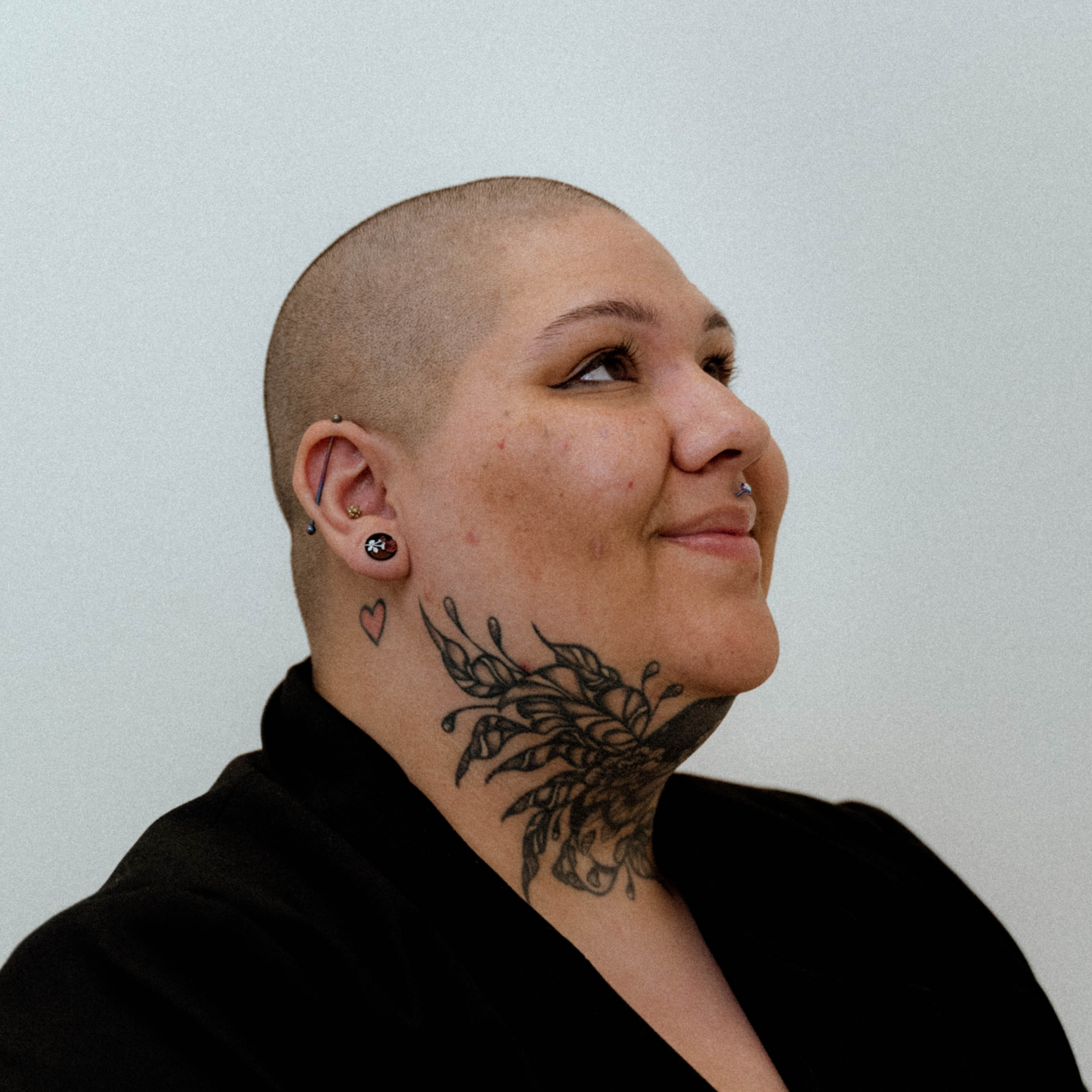

Tattoo Artists: Supporting Fat Clients Starts By Listening To Them
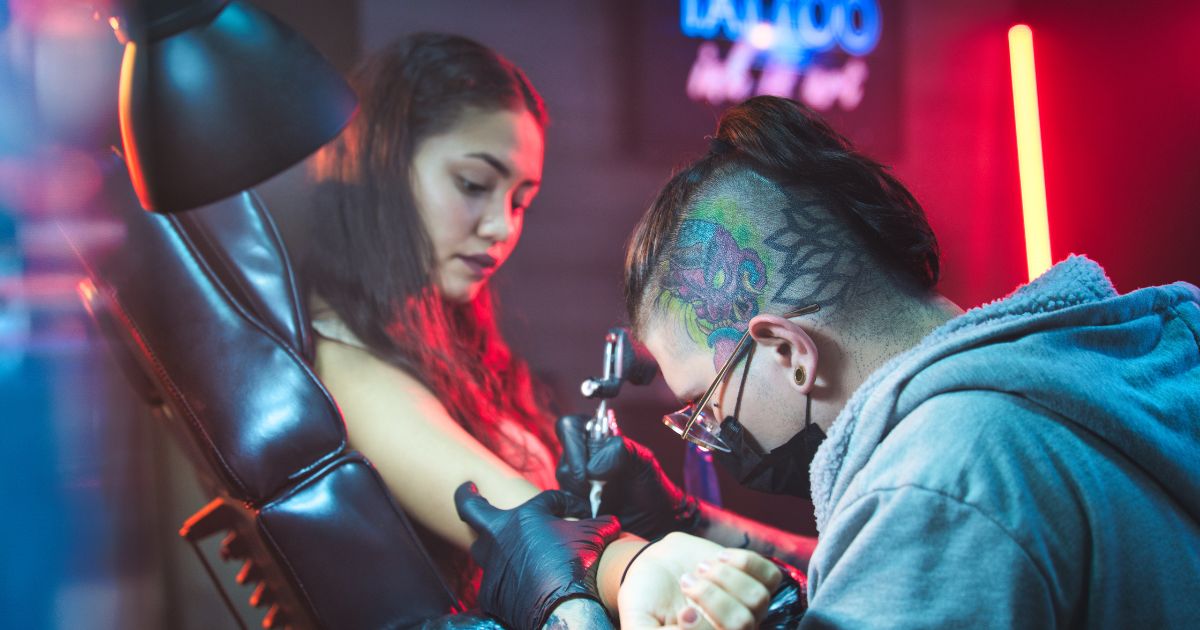
When I was fourteen, my mom and I were arguing in the front seat of her car. In my mom's eyes, my rebellious phase was getting a little too permanent, as the one piercing she had allowed me to get had now turned into two. Still fresh in my ear, the long, silver barbell was flushed warm with the heat of our fight.
“I just wish you wouldn’t have done that to your body,” sent me over the edge. My hands, shaky with anger but precise with rage, unscrewed the piercing ball and slammed the bar down on the middle console. And immediately, regret poured in. It started in my toes and settled in my throat. Every second we sat there in silence, my skin was healing up, and the consequence of giving up something that made me feel more myself in the intensity of the moment to make someone else more comfortable chilled me with grief. Each following time that I was asked to abandon who I was trying to grow into, to override my instincts and choices to be more palatable, and I did, I felt the water of mourning rise.
As I got older and felt ready to add tattoos to the way I expressed my body, I noticed that same grief pop up during my appointments. But instead of that grief happening loudly with an overwhelming reaction, giving up my self trust in those moments floated by unquestioned. In theory, there were multiple opportunities when I could have (and should have) asked for breaks while getting a tattoo, changed my mind, or not even started in the first place. But, I didn’t say anything because I felt like I couldn’t. And in the good experiences, I didn’t want to be “difficult.”
When I began learning to tattoo in early 2022, I was thoughtful about clients who might be navigating similar emotions, and gave a lot of attention to imagining how I could honor the immense trust of people who’d choose to sit in my chair.
My first tattoo on my own skin was perfect. Well, as perfect as a first tattoo could be. My second tattoo, this one on my wife, came with more excitement than nerves. My wife had been my biggest supporter since we met in middle school, and I knew her pain tolerance and limits almost as intimately as my own.
So I was confident when I told my eager waitlist of friends that it was finally time to come get their free tattoos, but hovering my needle above that freshly cleaned and shaved skin patch, I hit a block in my mind. I was afraid to go deep enough; I hesitated to cause others pain, and it showed in the light grey lines of the healed designs. I wanted to give my clients the best experience possible, but inadvertently, they left with tattoos I knew could have been better. I had to accept that pain was a part of this process.
I read opinions from established tattoo artists, asked my shopmates, and studied medical publications on pain management techniques. On my next tattoos, I remembered the feeling in my hand when the needle hit the right layer of skin, and pulled lines at depth with more confidence. The difference was realizing I didn’t need to manage clients’ pain for them; I needed to make space for communication and opportunities for them to take what they needed. I added pain management options to my setup, offered cleanable fidget objects to distract the brain's focus away from pain alone, and left them within reach. I’d practiced reminding clients that breaks are available during check ins, and to let me know if they needed anything at all. I was creating small ways that said, “I actually, really do care about you, and if you need something, I will listen.” More breaks were taken, stress balls were squeezed, laughs were had, and good energy flowed.
This lesson extended far beyond pain management. As someone who's always been in a fat body, advocating for oneself could be exhausting, constant, and sometimes, decidedly not worth the hassle. There were ways I had already expanded inclusion and comfort in my studio that removed a few barriers and worries, like purchasing different sizes of pillow bolsters for body support, using Dri-loc non-adherent pads instead of traditional breast pasties for more comfort and privacy, and creating a tattoo portfolio book with fat clients front and center. My biggest upgrade was replacing my first, foldable tattoo bed for a sturdy, size inclusive one after learning more about furniture weight limits. (TW: Includes numbers about furniture weight limits.) But still, I knew I had more to learn and improve on.
We absorb messages from countless things, and our lived experiences shape what we notice.
Because I was posting my tattoo journey on social media, along with the ways I was prioritizing the experiences of fat clients, people all over the world began commenting on obstacles to their own access and comfort in tattoo studios, and how they wished they felt comfortable enough to speak up to their artists.
These conversations, when had at all, often don’t make it offline and out of the bubble of social media. So when I went to a local tattoo convention in the fall of 2024, I set out a board that asked the question of “What do you wish your tattoo artist knew about size inclusion and fat bodies?” with a stack of colorful, blank sticky notes on the side.
Responses added to the board showed a clear lack of comfort. “Some studios have small mirrors that make it hard to see my whole body and how the tattoo looks. Sometimes I just say the stencil looks great because I can’t see it.” “If I don’t see bodies like mine on your page, I assume you aren’t comfortable tattooing bodies like mine.” “Just like… don’t gawk at me.” I saw the messages people were taking in, and most were before needles ever hit skin. A client on edge from the start is less likely to feel safe enough to advocate for themselves when they need something.
The board affirmed that others were dreaming of inclusion too, but in the conversations I had after that project, many people felt that challenging the exclusive status quo was discouraging. It was often too awkward, uncomfortable, or unsafe to bring up inaccessibilities when the probability of sparking change was low. We had learned to expect our voice not to matter.
But I could make it matter. And the more I looked at my own studio and tattoo approach with the intention to listen, learn, and adjust, the more I heard the words “comfortable,” “inviting,” and “relieved” from my clients.
The most noticed and appreciated improvements were also some of the most budget friendly ones.
Some were physical upgrades like adding a short, metal stool to make getting on and off the table easier and more steady, and getting a wide seated chair with thick padding and steel legs to ensure there is always somewhere stable and enjoyable to sit. Some changes were more emotional and verbal.
Now, before every tattoo I tell clients that a stencil should be “perfect before it’s permanent” and I encourage as much time as needed in front of the mirror. I ask twice before touching my needle to someone’s skin (sometimes “yes” comes out automatically the first time, and a good, deep breath is actually needed before we begin.). I always let clients know that if they need a break, a breath, or anything at all, the moment they say, my machine will go down. No pressure or persuasion.
Tattooing is a deeply personal and vulnerable experience, and every person deserves a service that happens with you, not to you.
Many of us can recall the first or the foundational time we learned to contain our needs and desires in exchange for approval or better treatment. I’ve been told a million times to be less. Adorning my body with tattoos that are unapologetic and boldly me has healed so many of those wounds, and yet, for a practice rooted in commemoration and connection to our bodies, nearly every fat person I know has experienced what they were trying to heal from by getting a tattoo, at a tattoo studio. Self expression shouldn’t cost dignity, safety, or sacrifice. Prioritizing the physical and emotional access for all bodies creates more opportunities for our communities to share feedback and obstacles they may be facing, and pushes forward the idea that no one has to be less to belong or be heard.