
Reclaiming the Body: What One Conversation Taught Me About Identity, Culture, and Healing

When we talk about eating disorders, body image, or our relationships with food, we often forget just how layered and deeply personal these experiences are. But recently, through an interview process that asked me to step into the roles of both interviewer and interviewee, I was reminded of a powerful truth: our relationships with food and body are never formed in a vacuum. They are shaped, often silently and unconsciously, by culture, identity, history, and systems of power.
In speaking with my interview partner, a small-bodied, cisgender, white woman, I witnessed what it looks like to experience relative ease and even joy in relation to one’s body. She shared how her culture emphasized strength and performance, how media reinforced her sense of belonging, and how she felt largely affirmed in her body. She also recognized her privilege in that ease, naming how little she’s had to question or defend her body in public or private spaces. She disclosed how her culture shaped her perception of the body as something powerful, capable, and worth celebrating when it performs well, but placed pressures when it could not live up to the expected strength and purpose.
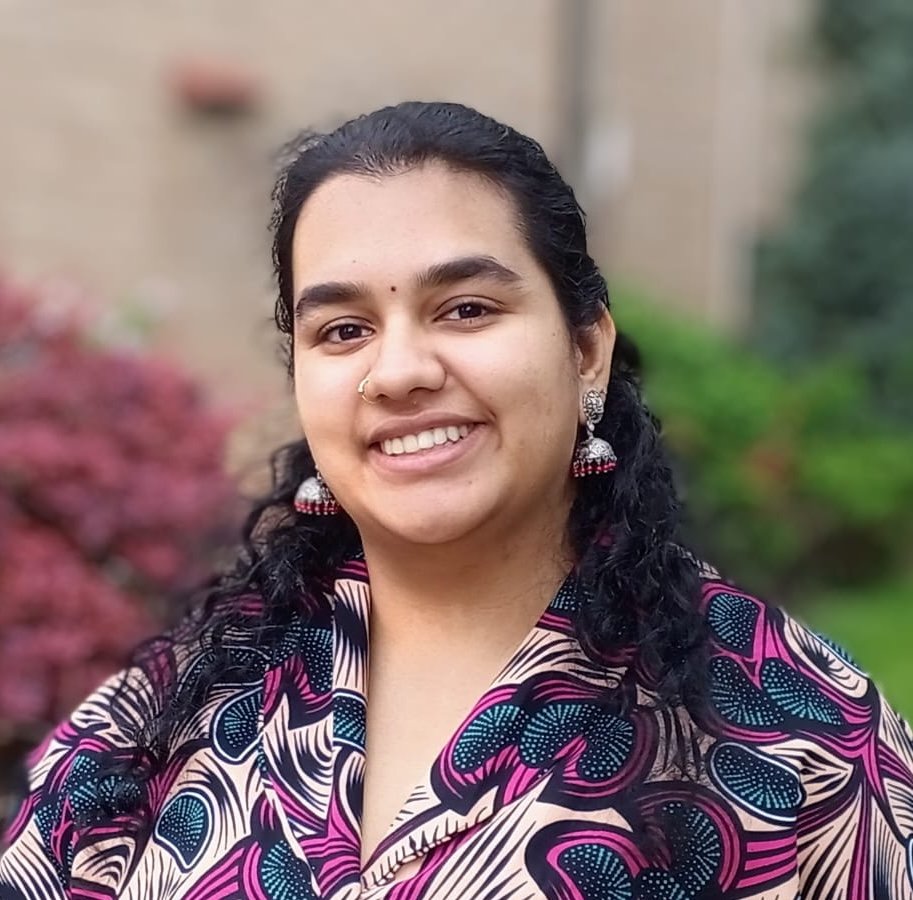
For me, the conversation landed differently. As someone whose cultural and familial messages were shaped by colonialism, patriarchy, and anti-fatness, my own body story is more entangled.
I’ve grown up with narratives that demonized my traditional foods, celebrated thinness as the ideal, and taught me to view my body with a critical, sometimes punishing lens. A message that told me my body’s purpose was in other peoples’ perception rather than what it could do for me. Even with years of reflection and personal work, it wasn’t until this conversation that I realized how much of my own shame and moralizing around food still lingers.
What this process brought into sharp relief is how profoundly intersectionality matters. Our identities, race, gender, size, socioeconomic status, culture, all shape how we interpret messages about food, body, and health. More importantly, they determine who is allowed to move through the world with body autonomy and who is asked to shrink, assimilate, or disappear. I’ve realized that for many people like me, eating is rarely a neutral act. It’s political. Cultural. Sometimes even painful. Whether it's navigating fatphobic health systems, internalized weight stigma, or the grief of abandoning traditional foods in pursuit of Western ideals, healing those messages is rarely just about the body. It's about reclaiming identity and undoing years of inherited shame.
One of the most profound takeaways from this experience was discovering how healing often feels most accessible when it reconnects me to my cultural roots. Eating my ancestral foods, moving away from rigid body ideals, and seeing my body not as something to fix, but something to honor, has become an act of resistance. It's decolonization. It's healing. When I eat my traditional foods, I’m not indulging, I'm reconnecting. When I choose rest over restriction, I’m rejecting systems that benefit from my exhaustion. When I practice self-compassion, I’m honoring the body I was taught to critique. I have learned that for those of us with marginalized identities, reclaiming joy in our bodies is not only possible, it’s radical.
This interview also made me pause and reflect on the unlearning I still need to do as a clinician. I caught myself assuming that most people struggle with their bodies, an assumption shaped by my own experiences. But the truth is, not everyone does. Some people live in bodies that the world affirms and celebrates, and I need to be able to hold space for that without projecting my own narrative.
Even more, I noticed how internalized health messaging, especially the false equation of thinness with health, continues to show up in my thinking despite my years of unlearning. In my own life, one of the most difficult things to untangle has been the power of medical authority.
I grew up in a culture where doctors were not to be questioned. Their word was final. So when doctors and public health figures framed fatness as a problem, as a risk, as something to be fixed, I believed them. I didn’t know I could challenge it. I didn’t know that the science was far more complex. I didn’t know that my health could be multifaceted, resilient, and not defined by the number on a scale. I am still untangling the web that years of history have sought to program. This work reminds me of the responsibility I carry to question, to stay curious, and to ensure I’m not replicating the very harm I aim to dismantle in my work.
If I’m honest, joy in the body still sometimes feels like a foreign concept to me. But I believe I can get there. I am someone who can support clients not just through grief and struggle, but also through celebration and pleasure, but the lesson has been that I deserve that too. Because healing doesn’t always have to be about what’s broken, it can also be about what’s still whole.
We need more stories that honor this complexity. We need to uplift voices from underrepresented communities, especially those whose bodies have been pathologized, politicized, or erased. And we need to remember that eating disorder care cannot be one-size-fits-all.
Our healing journeys are as diverse as our identities, and it’s time our conversations reflect that.