
Protect the Dolls and the Bricks: Love from a Trans Elder
Glo V wrote recently, “The reason I focus on eating disorders even amidst global chaos is because I don’t want to see any more bright minds be dimmed. Enough pure hearts have met a premature end . . . I have seen what the ED has done to me. How it has caved parts of myself that are needed in today’s world…. The revolution will be nourished.”
It can be extremely difficult to prioritize taking care of yourself when it feels like the whole world is going up in smoke, and yet it is key to being able to live to fight another day. As a transgender clinician, I am witness to the destructive impact our current political moment is having on our recovery communities, and I hope that I can offer some hope to those who are struggling to nourish themself in these fearful times.
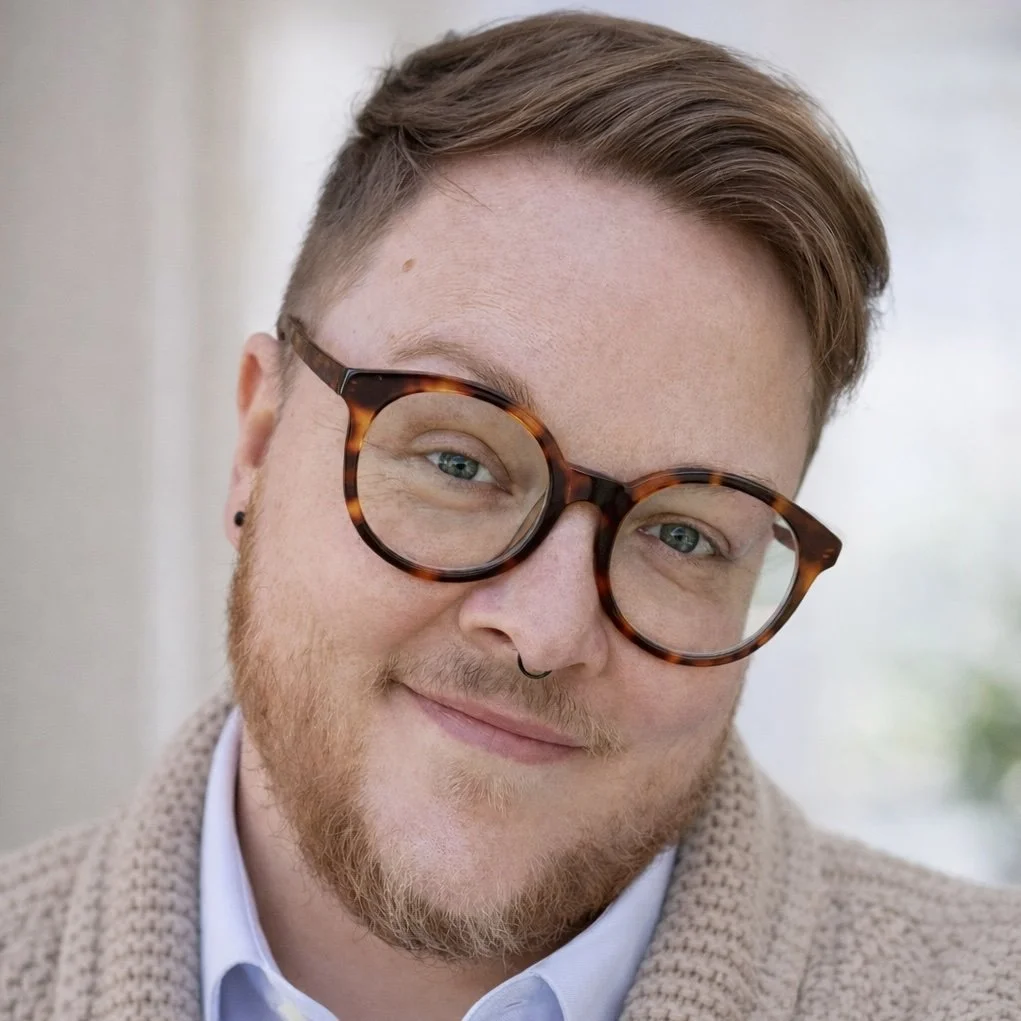
I’m a trans elder, and by that I mean I am over 40 and have been out as genderqueer since 2005, a time when most people were unfamiliar with the word “transgender.” As a college sophomore, my partner and I started our college’s first ever “Genderqueer Club,” called TRANScend, and along with a group of enthusiastic students and community members we began insisting that our school consider transgender students’ needs for inclusive bathrooms and residence halls. At the time, our college president suggested our student leaders consider transferring to a different school, rather than take our demands seriously. One student paper published an inflammatory article claiming that we were “inviting rapists and pedophiles” from the community into the school bathrooms to target female students, and that article got picked up by a conservative radio show that slandered us and our work. I am so grateful that doxxing didn’t yet exist. At the time, we felt our work was mostly ignored, but after graduating we learned that we had started a widespread conversation about transgender students’ needs. Over time, the school adopted more inclusive policies and converted many bathrooms to unisex, confirming our work made a lasting impact.
During this same time, unbeknownst to me, I had a raging eating disorder (Binge Eating Disorder). When I think back on that time now, what I remember most are moments walking around campus alone, filled with intense fear that I did not belong, feeling deeply isolated. I had friends who supported me, and in retrospect I learned that I was admired by my peers for my activism. But at that time, I was hurting and I was quite sick. The truth is that I was deeply impacted by the struggle to “earn” respect and accommodations from our school.
There is a very important dialectic in my story that is apt for the moment we are living through now: discrimination makes people with eating disorders sicker, but that doesn’t mean that they can’t survive and positively impact the world while they are sick.
My healing journey has been long and imperfect. I have had to sit with the loneliest parts of myself, cry with them, allow my heart to break for them all over again, and embrace myself for the soul crushing resilience that I built… brick by brick. Every day I have to make the conscious choice to nourish myself and love my community, even while the world actively seeks to eradicate us. Back in college, a classmate called me a “feminazi” for my commitment to equality. As I reflect back on that now, the projection is finally clear. My peers and I were blamed for “inviting rapists and pedophiles” to our all-gender bathrooms because THE rapists and pedophiles were on the radio sharing their intentions. Every accusation is a confession. Now I am going to anti-ICE community meetings and protests, and once again doing the uncomfortable work of taking care of myself in spite of those who would prefer trans people didn’t exist. It isn’t easy, and I am only able to do it because I share my pain rather than eating it, I don’t skip meals when I have something “more important” to do, and I don’t pretend to be okay when I am not. I feel confident speaking for the whole trans community when I say: we are not ok.
I don’t have easy advice for anyone, only grit and true experiences, both from my life and from the lives of hundreds of transgender and nonbinary people I have worked with.
Recovery can feel close to impossible in the midst of cruel and ongoing attacks on transgender youth, transgender athletes, and the health professionals who provide gender affirming care. I feel intense rage that so much progress towards trans equality has been erased. The gender affirming clinics that have shut their doors will not simply be reopened. Thousands of activists over the past seventy years built those programs brick by brick, grant by grant, program by program. The transgender youth struggling with eating disorders, depression, substance use, homelessness, and bullying feel more hopeless than ever, and gender affirming care bans are causing suicide attempts to climb in the U.S. Every day I sit with trans people who are being denied medically necessary surgeries, legal documents, and our constitutional rights. Many QTBIPOC people are afraid to leave their homes as we continue to witness senseless violence from immigration and police. Disabled transgender people have been effectively blocked from public life by prematurely lifted mask mandates. Transgender people in federal prisons are being forced to discontinue their medications. As I write this, I imagine we will watch many more atrocities before this blog is published.
And yet, amidst all this loss and destruction I also feel a deep sense of security in knowing that our community is not going anywhere. A lot has changed in 20 years, and a lot will continue to change. If you are feeling isolated and alone, wondering if you belong, please know that you are valued and deserving of freedom, just like everyone else. The advocacy work I did as a student was fueled by anger, and some days it made me sicker. I had to take breaks from the work to replenish my energy and motivation, but one day at a time I found a way to live authentically and reject the temptation to make myself smaller. I saw that my eating disorder took things from me that I have needed in 2026, and I am grateful I fought hard to get those pieces back. Sometimes you will feel hopeless but it won’t be true that hope is lost. Life is long, and everything that is under attack was once non-existent . . . until some insecure, imperfect, idealistic people came together and demanded more. Pick up a brick and start building. Find others who want to build with you. Protect the dolls AND the bricks, because none of us are free until all of us are free. One day you will stand back and be surprised by what you helped build and eternally grateful that you didn’t give up. If someone burns down your work, get angry and loud, and then we will rebuild together. Nourish yourself no matter what, even if your efforts are imperfect and feel hopeless. It isn’t easy, but it is worth it, and even if you feel hopeless, all hope isn’t lost.