

Media Messaging and Its Role in Disordered Eating
On my sixteenth birthday, I finished my final round of bloodwork in preparation for gastrointestinal surgery — one that yielded the promise of processing my food without constant discomfort. As I was leaving, the nurse told me she “wished she had what I had,” as if I had cracked the code to indefinitely maintaining the beauty standard. In that moment, I shifted from someone yearning for my healthy body back to someone who would spend the next years of my life destroying it.
I began to realize that the way I felt was far from isolated. I was in a culture where skinny meant better; it meant worthy. Social media, commercials, TV, and film combined to almost support the goals I had for my body in my own head. Our culture and society are saturated in weight stigma, a harmful ideal that devalues individuals based on the principle of physical appearance. Further, it promotes shaming bodies that are not deemed as falling within the beauty standard of thinness that has been promoted for decades.
These messages can change the way we view our bodies, food, and personal worth. If we do not challenge this messaging, more young people will continue to believe that their health is exchangeable for the price of acceptance.
We know that eating disorders are influenced by many parts of the world around us. The medical community, specifically the psychiatric community, has long sought out the proper intervention for combating the life-altering implications of eating disorders. Culturally, as we become more enmeshed with our online presence, we have become more comfortable with pushing for the idealistic body. We praise influencers, demonize healthy relationships with food, and set unrealistic beauty expectations for youth of all genders from dangerously young ages. Similarly, it has become acceptable to make comments about other people’s bodies and food choices anonymously online. This messaging, both direct and indirect, can cause immeasurable damage to mental and physical health.
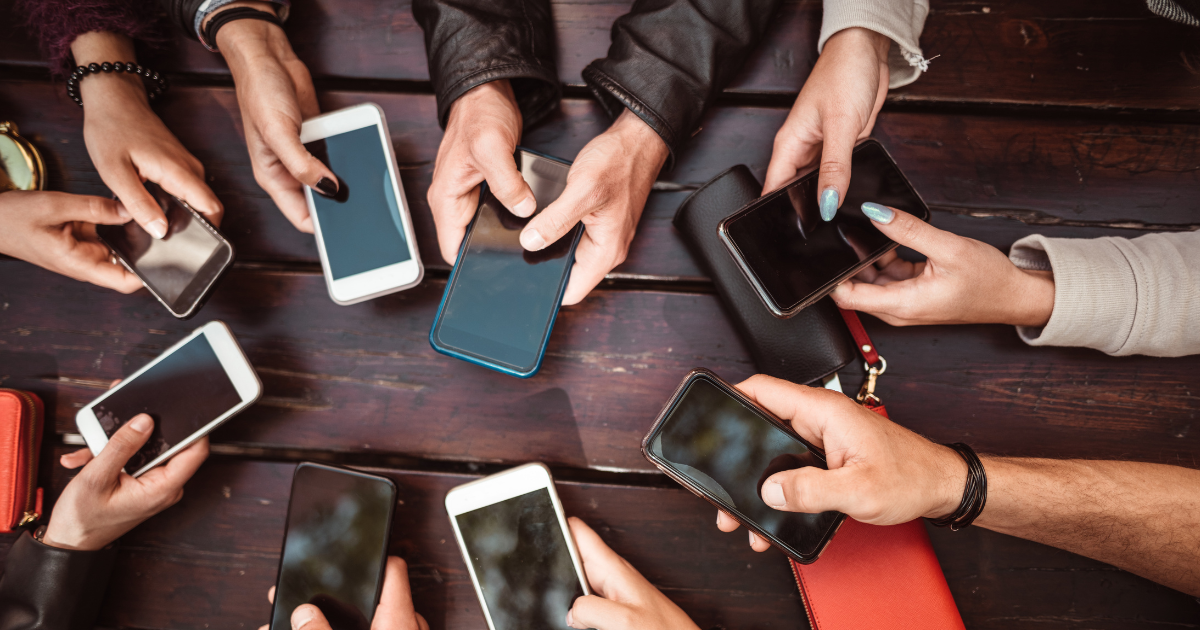
A 2024 article covered by the University of Colorado states that “social media sites have promoted trends such as ‘thinspo,’ which is focused on the thin ideal, and 'fitspo,’ which perpetuates the belief of there being a perfect body that can be achieved with dieting, supplements and excessive exercise.” The more time we spend online, the more we’re exposed to messages about our bodies, food, and our self-acceptance. So much so that we may begin to overlook their harmful effects. In the midst of my eating disorder, I would frequently seek out videos surrounding food and utilized them as a way to justify my behavior. As I continued to engage with the content, the more I got similarly harmful recommendations. This created a feedback system that I never had to seek out; it was placed in the palm of my hand.
During the pandemic, we saw a large increase in time spent online. As the audience grew online, so did shaming of bodies, new diet fads, and more negative commenting than ever before. It has never been easier to cast judgment onto others, nor has it ever been so anonymous. Although weight stigma and diet culture are not new concepts in our society, body shaming has skyrocketed with the increase of online spaces. Further, comment spaces seldom challenge these harmful ideals. The combination of weight stigma and fat shaming in online spaces further perpetuates the narrow beauty standards and can be correlated to growing rates of unrealistic body image standards. A 2024 publication by Johns Hopkins Medical Center shares that, “[...]in the United States from 2018 to 2022, health visits for eating disorders more than doubled for children under the age of 17.” This statistic is not only shocking, but it also represents thousands of adolescents and teenagers who are beginning a lifelong fight to recover.
We cannot expect teenagers and young adults to give up social media. It can be a beautiful space to connect with others, find community, and express oneself. Instead, we can ensure that these spaces remain safe. Similarly, we cannot expect that companies, platforms, or broader society would be keen on wiping out mass media. That leaves us with a unique opportunity to use the power the media holds for good.
We can form healthy online spaces that advocate for balanced lifestyles and self-acceptance. Spaces that represent various gender, race, body size, and other lived identities.
Many young people seek out social media for a sense of belonging. Thus, creating online groups that positively express ideas and feelings surrounding body image is a tangible way to combat the toxic messaging that has largely become the norm online. Similarly, we can hold popular social media platforms like Instagram, Facebook, Twitter/X, and TikTok accountable for not removing harmful hashtags and content. Advocacy groups and passionate protesters have already been taking steps to hold these companies accountable through various proposed bans to remove pro-eating disorder content. This collective advocacy can work to create a future where harmful beauty standards and disordered eating are no longer the norm online.
With increased community support, regular media monitoring, and greater in-person and online education, I believe we have an opportunity to turn awareness into action. Education is critical for young adults, parents, teachers, health professionals, and the communities surrounding them. I write this at 25 years old today, in recovery and seeking to enact the same level of care my sixteen-year-old self was longing for. Now, nine years later, I do not want us to continue to mistake suffering for success. I want a society that finds beauty in our differences, and celebrates health over weight. I truly believe we can modify our current use of media in a way that may challenge the cultural climate, foster acceptance of all bodies, and can continue to build upon the confidence youth should have to seek out help as the stigma is dismantled.